
Occupational Risk Management: A Strategic Challenge for Businesses
Occupational risk management has become a key priority for organizations of every size and industry. Once considered mainly a regulatory obligation, it is now recognized as a genuine strategic driver of business performance.
Between human, legal, and financial challenges, organizations face increasing pressure. Risk prevention is no longer limited to regulatory compliance; it directly contributes to overall business performance.
Effectively managing occupational risks means protecting employees, securing decision-making, and ensuring business continuity.
In many organizations, preventive actions already exist but remain fragmented, difficult to manage, and hard to sustain over time.
Why Compliance Alone Is No Longer Enough
Many organizations believe they are sufficiently protected as soon as they comply with legal obligations, particularly regarding the Single Risk Assessment Document (DUERP). However, this approach is no longer sufficient.
In the event of a serious or fatal workplace accident, the employer may still be held liable, even when prevention measures appear compliant.
What truly makes the difference today is the ability to:
- demonstrate the consistency of the prevention strategy;
- provide evidence of implemented actions;
- track employee exposure and management decisions;
- anticipate critical situations.
Without this structured approach, organizations expose themselves to significant legal and financial risks, including potential criminal liability for executives.
Occupational Health and Safety: A Regulatory Framework
Occupational risk management is governed by a comprehensive regulatory framework designed to ensure employee health and safety.
Employers must therefore implement a structured prevention strategy to protect employees in the workplace.
This approach relies on several essential pillars:
- hazard identification;
- workplace risk assessment;
- implementation of appropriate preventive actions;
- continuous monitoring and improvement of safety measures.
It also includes collective protection measures complemented, where necessary, by personal protective equipment (PPE).
However, in many organizations, these obligations are still managed in a fragmented or insufficiently structured way.
The Real Consequences of Inadequate Prevention
An incomplete or poorly structured prevention strategy can lead to significant consequences, including:
- more workplace accidents;
- increased occupational diseases;
- higher costs related to absenteeism and workplace injuries;
- reduced quality of life and well-being at work;
- productivity losses;
- greater legal exposure.
Beyond regulatory compliance, occupational health and safety has become a major driver of organizational performance and long-term sustainability.
Structuring Your Prevention Strategy: A Key Performance Driver
Moving beyond compliance toward a strategic prevention approach requires organizations to structure their HSE processes around several key areas:
- centralizing risk-related information;
- standardizing prevention processes;
- monitoring actions over time;
- ensuring reliable traceability;
- using performance indicators to support decision-making.
Without proper structure and appropriate tools, prevention initiatives remain difficult to manage effectively.
Digital HSE solutions such as ALFATEA help organizations centralize data, structure processes, and efficiently manage all HSE activities: risk assessments, single documents, audits, action plans, workplace accident monitoring, and chemical risk management.
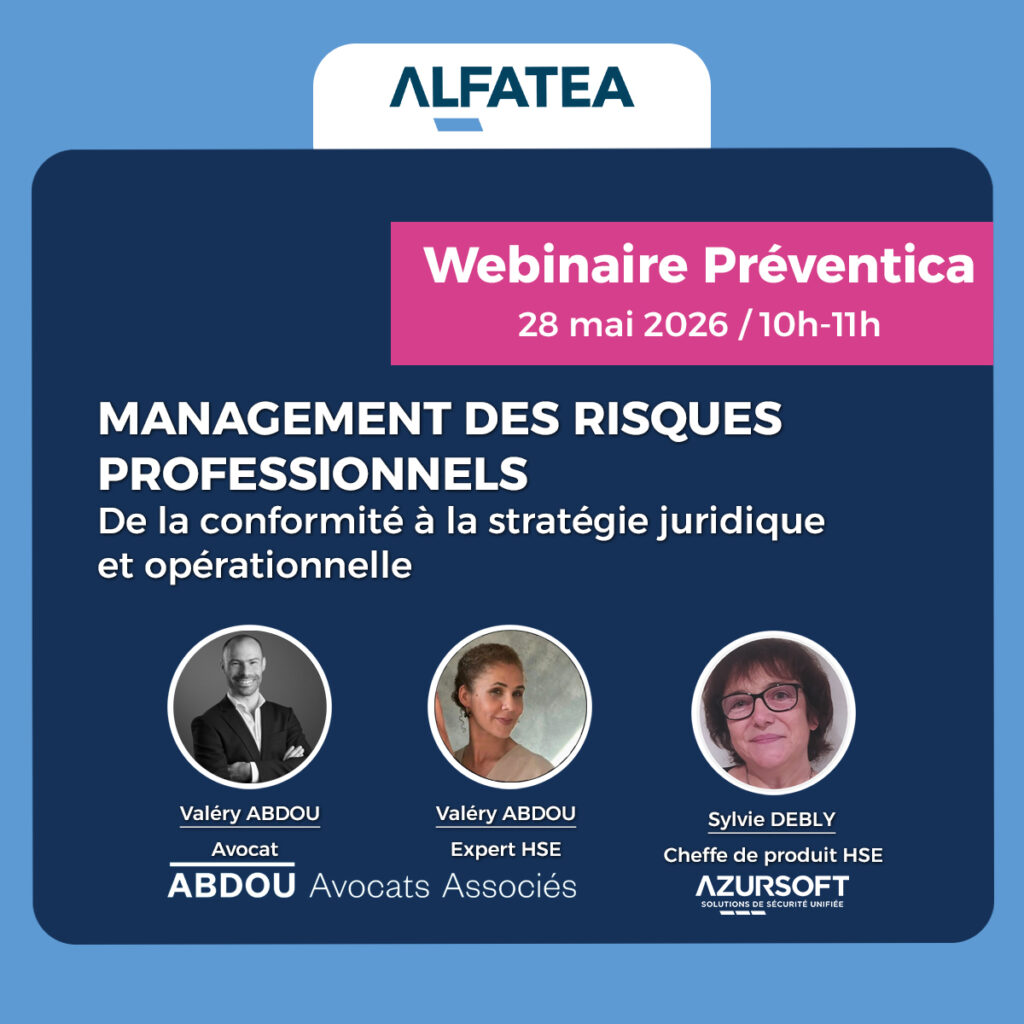
Webinar: Occupational Risk Management
To help organizations address these challenges, Azursoft and ABDOU Avocats Associés offer a practical webinar demonstrating how occupational risk management can become a true governance tool.
Who Should Attend?
This webinar is intended for professionals involved in occupational risk prevention:
- Business leaders
- HR managers
- HSE managers
- Prevention specialists
- Operational managers
A Practical Program Focused on Occupational Risk Management
During this webinar, participants will discover how to:
- secure prevention documentation;
- effectively track employee exposure;
- integrate legal risk analysis into HSE management;
- anticipate critical situations;
- strengthen their legal defense in the event of litigation.
The objective is to provide practical recommendations that can be implemented immediately within organizations.
Combining Legal and Operational Expertise
This webinar combines two complementary areas of expertise:
- ABDOU Avocats Associés: specialists in corporate legal defense, providing legal guidance on occupational risk management and regulatory best practices.
- Azursoft: experts in digital HSE solutions, demonstrating how to structure, monitor, and document occupational risk management through the ALFATEA HSE platform.
This combined approach addresses every major aspect of occupational risk management within a single methodology.nsemble des enjeux liés au management des risques professionnels.