
In France, universities often manage dozens of buildings spread across multiple campuses, sometimes several kilometers apart.
Every day, thousands of students, lecturers, researchers and technical staff move across these facilities. Behind this constant activity lies a common challenge: ensuring the safety and security of people while maintaining smooth daily operations.
But how can such a large and diverse environment be efficiently supervised? Access control, video surveillance, intrusion detection, fire safety systems and technical building management all operate with different interfaces and technologies.
This article explains how a security and safety hypervision platform helps universities and higher education institutions unify their systems, improve responsiveness and strengthen confidence across campus.
Growing Campuses, Increasingly Complex Security Systems
Universities and higher education institutions have become true mini-cities. Multiple campuses, buildings of different ages, equipment installed over many years and supplied by different vendors all contribute to a fragmented security ecosystem.
When a fire or intrusion alarm is triggered, operators often need to switch between several applications, identify the correct cameras, validate the event and contact on-site teams.
This fragmentation creates one major risk: reduced response time.
A University Security Ecosystem Under Pressure
Campus directors, IT departments and security managers all face the same reality: protecting a modern university means managing growing complexity.
As campuses become larger and more connected, security teams must process:
- more alarms,
- more data,
- more operational decisions,
while responding faster than ever.
Imagine a university operating several campuses:
- access control is managed by one vendor,
- video surveillance by another,
- technical supervision through an independent system.
The result?
No global operational view.
When an intrusion occurs in a remote building, operators must contact local staff, identify the relevant cameras, retrieve footage from another platform and confirm the alarm by phone.
This fragmentation leads to:
- slower incident response,
- limited situational awareness,
- more complex and costly maintenance.
Universities increasingly require a solution that is unified, scalable and interoperable.
This is precisely the purpose of a security and safety hypervision platform.
Hypervision: Unifying Systems to Improve Operations
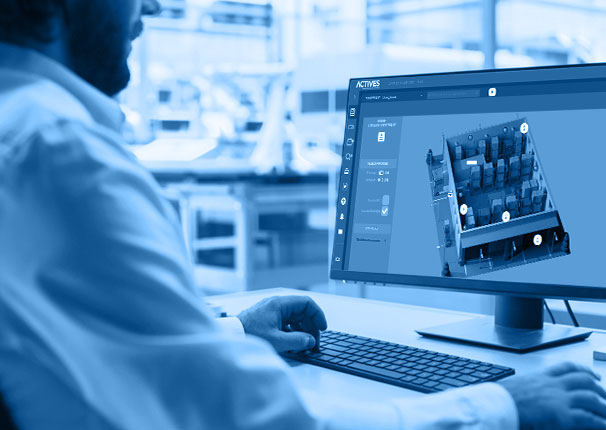
Security hypervision is a centralized platform bringing together every safety and security system within a single interface.
Rather than replacing existing technologies, it connects, synchronizes and orchestrates them.
Operators can:
- visualize multiple systems simultaneously,
- monitor and manage events,
- correlate information from different sources,
- coordinate actions from one interface.
Video surveillance, intrusion detection, access control, fire alarms and technical building systems all converge into a unified operational environment.
Example
An intrusion alarm is triggered in a laboratory.
Within seconds, the operator:
- automatically displays the associated cameras,
- verifies the situation,
- remotely locks access doors,
- dispatches intervention teams.
Hypervision is more than a productivity tool.
It significantly reduces operational risk by accelerating decision-making.
Beyond technology, hypervision acts as a true federating platform, bringing together all security and technical building management systems while coordinating prevention and protection activities.
Practical Applications for Universities and Higher Education Institutions
1. Supervising Multiple Campuses from One Control Center
Universities operating across several campuses can manage every site from a centralized security control room.
Interactive maps and dynamic floor plans provide operators with a comprehensive overview while simplifying resource sharing.
2. Managing Access Remotely
Operators can instantly:
- lock or unlock buildings,
- trigger evacuation scenarios,
- control intercom systems,
all from a single interface.
Example
A fire alarm is triggered in an academic building.
The operator immediately:
- opens emergency exits,
- checks evacuation progress through cameras,
- notifies security and technical teams.
3. Managing Alarm Overload
Large campuses generate thousands of alarms every day.
Hypervision automatically:
- filters,
- prioritizes,
- classifies
events according to predefined operational procedures, allowing operators to focus on critical incidents.
4. Correlating Events for Better Decision-Making
Hypervision automatically correlates:
- intrusion alarms + video,
- fire alarms + evacuation plans,
- technical alarms + sensitive areas,
- access control + personnel presence.
This contextual intelligence enables faster and more accurate decisions.
5. Recording Every Action
Every alarm, action and operator decision is fully recorded.
These audit trails support:
- incident analysis,
- regulatory compliance,
- continuous improvement.
6. Leveraging Existing Infrastructure
Universities do not need to replace their current equipment.
Hypervision integrates heterogeneous technologies and extends the life of existing investments while remaining scalable.
7. Connecting Every Stakeholder
Hypervision serves as the operational hub connecting:
- security teams,
- maintenance services,
- IT departments,
- facility management,
- executive management,
- external responders.
This shared operational picture significantly improves coordination during incidents.
Towards Smarter, Better Coordinated Campus Security
Adopting a hypervision strategy means moving from simple reaction to intelligent operational management.
Information becomes:
- centralized,
- structured,
- immediately actionable.
For universities, this delivers:
- faster incident response,
- improved collaboration,
- optimized maintenance,
- stronger campus resilience.
Today’s universities must balance openness, security and educational continuity.
Security hypervision provides a practical answer by transforming fragmented systems into one unified operational platform.
Rather than simply monitoring more systems, it enables institutions to connect stakeholders, better understand situations, make better decisions and better protect their campuses.